Skip to content

Grown, Not Made — Why We Chose Cotton
- by Gravitee Atelier
Grown, Not Made — Why We Chose Cotton
Atelier Notes · On fabric
Before a colour can speak, it needs something to speak through.
We did not invent our colours — nature did. The same is true of the cloth that carries them. Cotton begins as a seed on a shrub, wrapped in a soft boll that splits open in the sun. Each fibre inside is a single plant cell, grown long and fine across a season of light and water. Nobody manufactured it. We only had to choose it.
This is the first of our Atelier Notes — short pieces on the craft beneath the colour. It begins where every Gravitee tee begins: with the fibre.
A fibre this land has always known
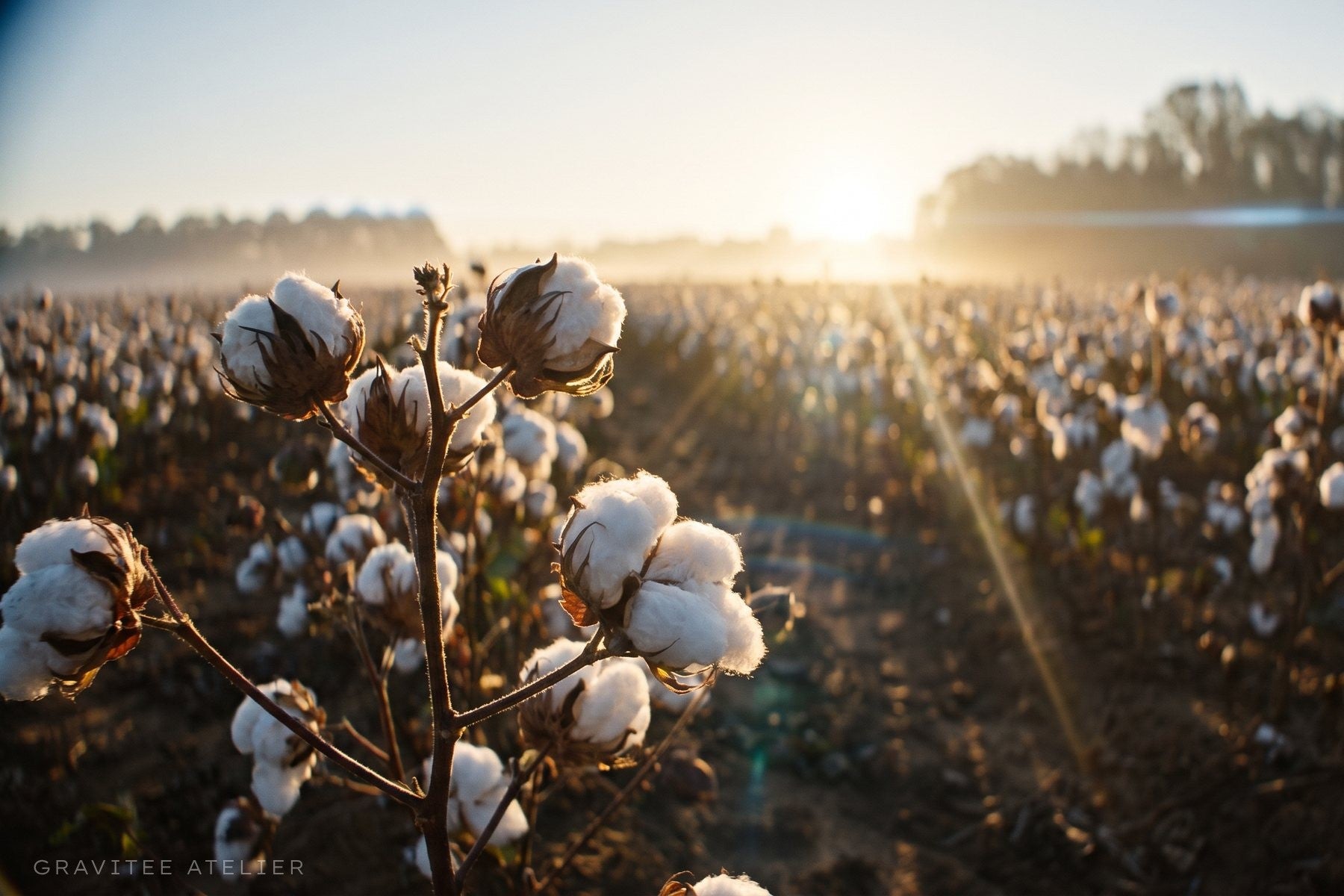
Cotton has been spun on this subcontinent for thousands of years. A fragment of cotton cloth found at Mohenjo-daro, more than four thousand years old, is among the oldest known anywhere. When word of it reached ancient Greece, the historian Herodotus described it as wool that grew on trees — finer than any sheep's.
That history matters to us. A tee is worn close, through long days and real heat. The cloth should understand this climate as well as we do.
Cotton vs polyester: what the fibre does
Most of what makes a cotton t-shirt feel right comes down to one quiet fact: it is a plant, and it still behaves like one.
It takes in moisture. A cotton fibre is made almost entirely of cellulose, and cellulose welcomes water. Under standard conditions, cotton holds around 8.5 per cent of its own weight in moisture from the air. Polyester — a fibre made from petroleum — holds less than half a per cent. It can move moisture along its surface, but it barely takes it in. On a still, humid afternoon, you feel that difference: one fabric settles against the skin, the other clings.
It stays calm. Static gathers on fabrics that hold no moisture. Because cotton always carries a little water within its fibres, charge slips away instead of building — barely a crackle when you pull it on, little cling where it shouldn't.
It softens with time. Cotton grows more supple with wear and washing. A well-made cotton t-shirt does not peak on the day it arrives. It settles into you.
It leaves no plastic behind. All fabric sheds tiny fibres in the wash. When the fabric is synthetic, those fibres are plastic. When it is cotton, they are plant.
Where colour meets cloth
For a house built on colour, this is the part that matters most.
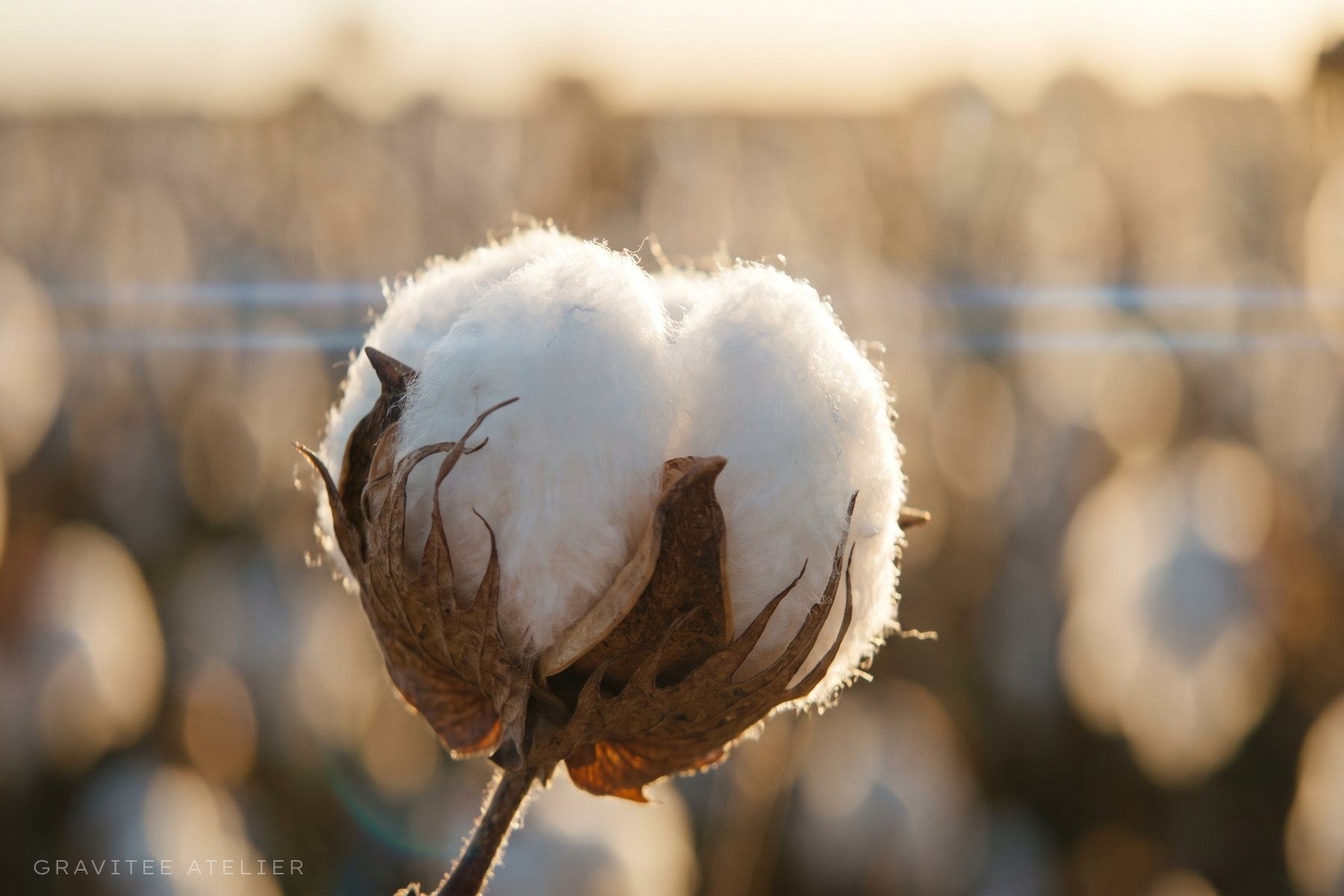
Because cotton welcomes water, it welcomes colour too. It takes dye readily and evenly — one reason it has carried colour for as long as people have woven it. Polyester, which resists water, has to be coaxed into colour with high heat and pressure.
So when a Gravitee colour looks deep and even, the cloth is part of the reason. Cold water and shade help it stay that way.
How we finish the fibre
Choosing cotton is the first decision. How it is prepared is every decision after.
Super-combed. Before spinning, the cotton is combed to draw out the short, uneven fibres and keep the long ones. Long fibres spin into a smoother, stronger yarn — less fuzz on the surface, a cleaner face for colour.
Bio-washed. The finished fabric is washed with enzymes that lift away the loose fibre ends at its surface. It is soft from the first wear and less inclined to pill.
Pre-shrunk. The fabric is relaxed before it is cut, so the fit you choose is the fit you keep.
One deliberate exception. The body of every tee is 100% cotton. The neckband alone is ribbed with a touch of Lycra, so the collar returns to its shape instead of slowly giving way. A small thing, chosen on purpose.
And for the lightest tee in our atelier, we reach for Supima — cotton with an extra-long staple, among the finest grown anywhere, cut for men and women.
Why it matters to us
There are fibres that are faster to make and fibres engineered to shine. We chose the one that grows.
Nature painted the colours. Nature grew the cloth. We simply brought the two together — and left them room to breathe.
In brief: what cotton means when you wear it
- Comfort in our climate. Cotton holds around 8.5 per cent of its weight in moisture from the air; polyester holds less than half a per cent. On a warm, humid day, cotton settles against the skin instead of clinging.
- Calm to wear. It builds little static — barely a crackle when you pull it on, little cling through the day.
- Better with time. It softens with every wear and wash. Super-combed yarn and bio-washing keep the surface smoother and less inclined to pill.
- Colour that stays deep. Cotton takes colour evenly into the fibre. Wash it cold, dry it in shade, and it stays that way longer.
- Plant, not plastic. Cotton is almost entirely cellulose — a plant fibre. What it sheds in the wash is plant, not plastic.
- A shape that holds. Every Gravitee tee is 100% cotton in the body, pre-shrunk, with a touch of Lycra in the ribbed neck so the collar returns to its shape.
There is more beneath the colour, and more Atelier Notes to come. If you would like the next one to find you, join The Palette Letters below — our editorial space for subscribers, where we share how the atelier thinks, works and sees.
Colours that speak — find yours →
Colour that speaks.
- Posted in:
- atelier-notes
- cotton
- craft
- fabric
- gravitee-atelier