Skip to content

The Weight of Cloth — 180 or 240 GSM, and How to Choose
- by Gravitee Atelier
The Weight of Cloth — 180 or 240 GSM, and How to Choose
Atelier Notes · On weight
GSM is how much one square metre of fabric weighs, in grams. A 180 GSM tee is light and fluid: it drapes close to the body, breathes easily and is at its best in humid, still hours. A 240 GSM tee has body: it holds a relaxed shape away from you, keeps a little more warmth and is at its best in air-conditioned rooms, on breezy evenings and on cooler days.
Neither is the better tee. They suit different shapes, different hours and different days — which is why most wardrobes are better with both. Here is what GSM measures, what changes between the two weights, and when each one comes into its own.
What does GSM mean on a t-shirt?
GSM stands for grams per square metre: the weight of one square metre of fabric. A common way to measure it is simple: a round sample of 100 square centimetres — a hundredth of a square metre — is cut from the cloth and weighed, and the weight is multiplied by a hundred. A higher figure means more fibre in every square metre: a thicker yarn, a denser knit, or both.
There is no official line between light and heavy. Guides draw it in different places, but broadly, tees under about 150 GSM read as light, those above about 200 GSM as heavy, and the range between as mid-weight. Our regular tees, at 180 GSM, sit in the middle. Our oversized tees, at 240 GSM, sit at the heavier end.
Is a higher GSM better quality?
No. GSM tells you how much cloth there is, not how good it is.
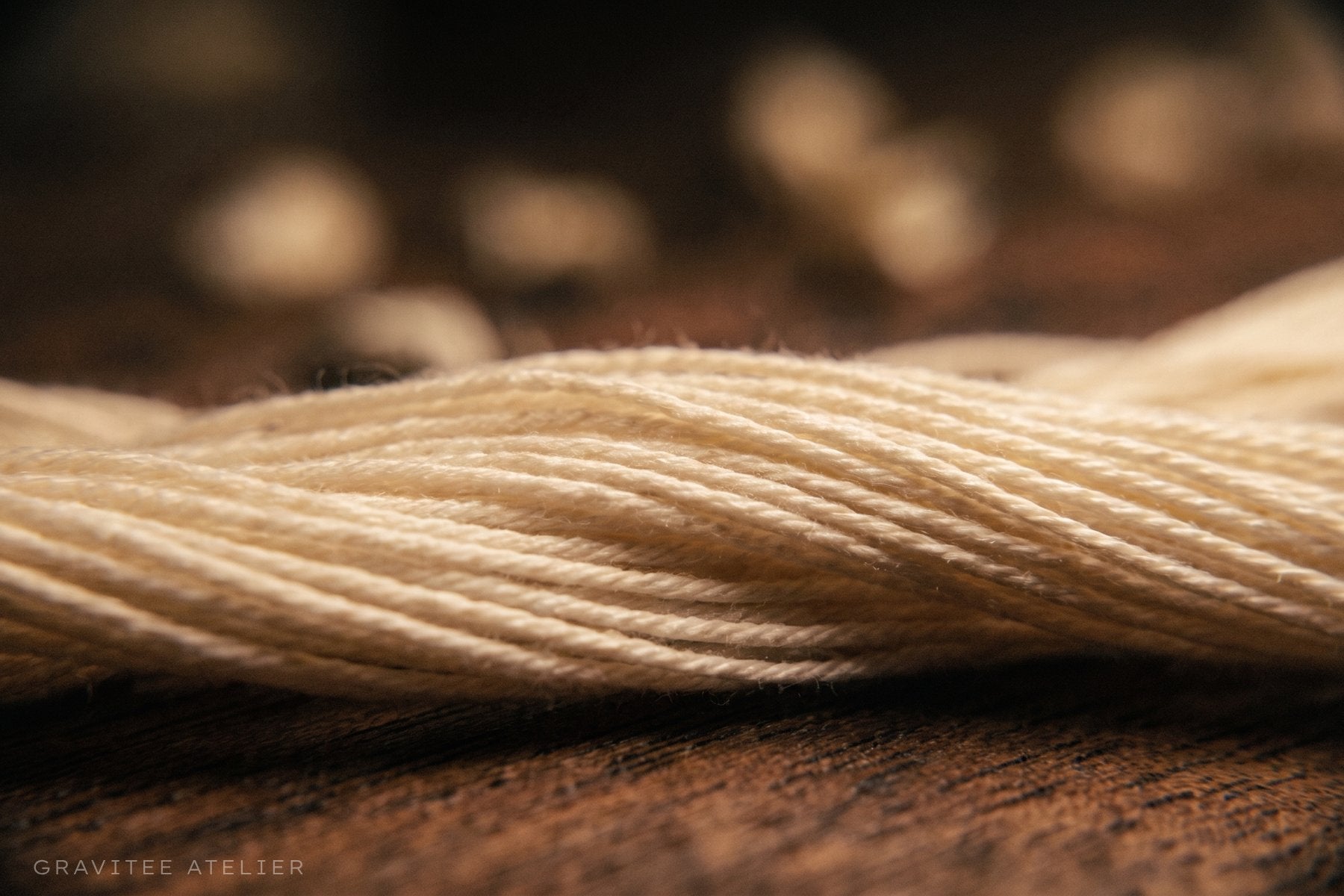
Quality comes from the fibre and what is done with it: how long the cotton's fibres are, whether the short ones were combed out, how the yarn was spun and how the cloth was knitted and finished. A tee of any weight made from short, coarse fibre can feel rough and pill early; one made from well-combed cotton, light or heavy, can feel fine in the hand and wear well for a long time.
That is why both our weights start from the same place. The body of each is 100% super-combed cotton, bio-washed and pre-shrunk; the neck rib has a touch of stretch. The difference between them is weight and cut, not quality. (More on why we chose cotton, and how we prepare it, in Grown, Not Made.)
What changes between 180 and 240 GSM?
Sixty grams a square metre is a third more cloth. On the body, you feel it.
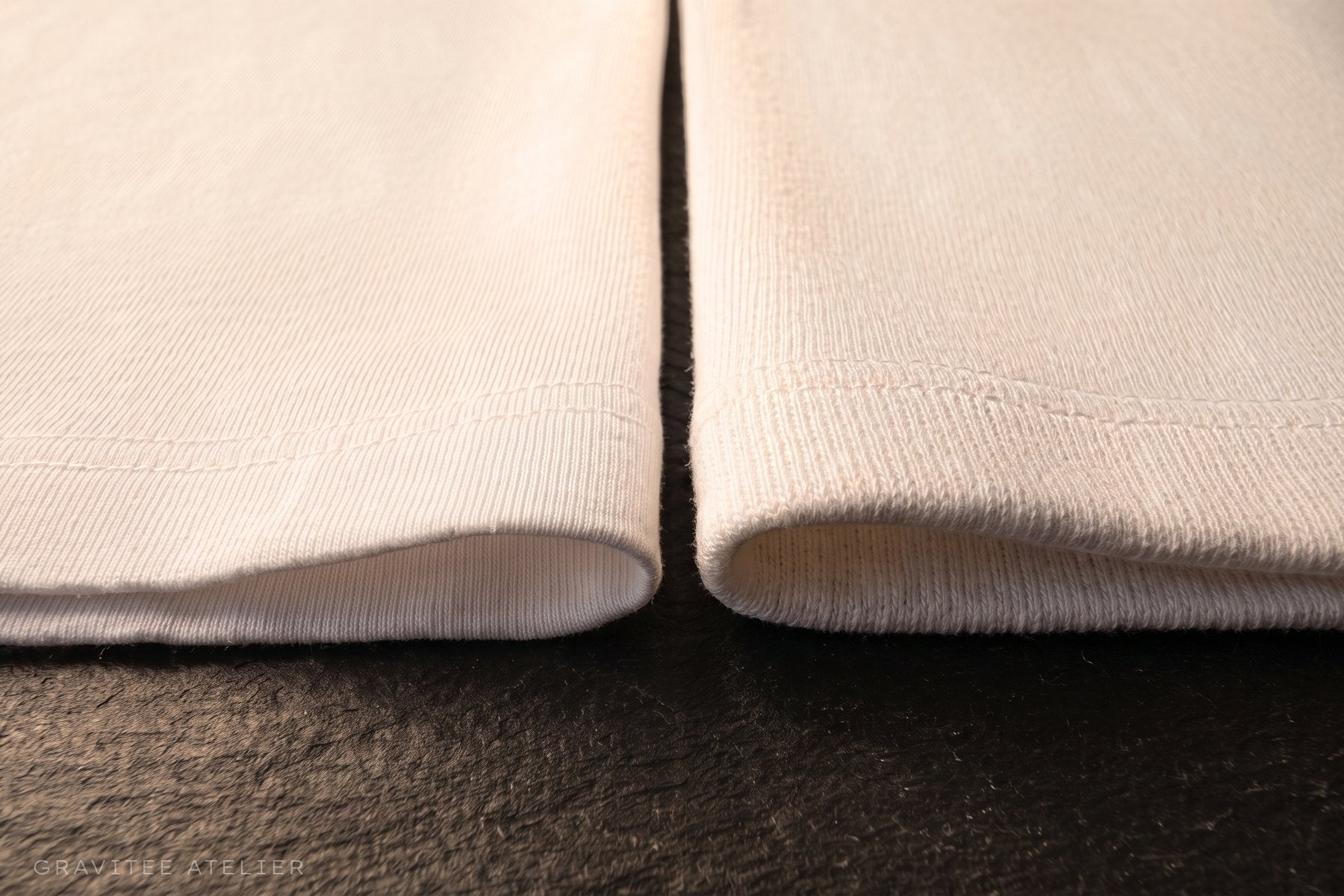
Shape. A 180 GSM knit drapes: it follows the line of the body and moves as you move. A 240 GSM knit has body: it falls in straighter lines and holds a shape of its own, a little away from you.
Air and moisture. A lighter, thinner knit usually leaves more open space between its loops, so more air passes through it. Textile research bears this out: as mass per square metre and thickness rise, air permeability falls (Chakroun et al., 2021). A lighter cloth also holds less water in total when you sweat. On a humid, still day, that is what 180 offers.
Warmth. More cloth keeps a little more warmth in. In an air-conditioned office, on a breezy evening or on a cooler day, that is what 240 offers.
Cut. Each weight is paired with the cut it suits. Our 180 is cut regular, with a set-in shoulder, so it sits neatly on its own and lies flat under another layer. Our 240 is cut oversized, with dropped shoulders and a relaxed chest, so the cloth stands off the skin and air can move beneath it.
How do our 180 and 240 GSM tees compare?
| Regular · 180 GSM | Oversized · 240 GSM | |
|---|---|---|
| Cotton | 100% super-combed | 100% super-combed |
| Finish | Bio-washed, pre-shrunk | Bio-washed, pre-shrunk |
| Feel | Light and fluid; breathes easily | Substantial on the shoulders; soft in the hand |
| Shape | Drapes; follows the body | Holds its own shape; falls straight |
| Cut | Set-in shoulder, clean through the body | Drop shoulder, relaxed chest |
| Comes into its own | A close line · humid, still hours · on its own or under a fitted layer | A relaxed shape · air-conditioned rooms · breezy evenings and cooler days |
Which suits the way you dress?
Weight and cut work together, so the first question is the shape you like to wear.
- A close line that follows the body — 180, in our regular cut: neat at the shoulder, easy through the body, a line that looks clean without looking tight.
- A relaxed shape that stands away from it — 240, in our oversized cut: generous at the shoulders, relaxed through the body, a silhouette that looks considered without looking constructed.
Which GSM suits Indian weather?
Weather in India changes not only from place to place but through a single day. A humid afternoon can turn into a breezy evening, and an office can be colder than the street outside it. So it helps to choose by the conditions you are dressing for, not by where you live.
- Humid, still air — 180. When the air is already damp, the lighter cloth breathes more freely and holds less water.
- Dry heat — either. 180 for its lightness; 240 for its loose cut, which keeps the cloth off the skin.
- A breeze or an evening that cools — 240. Moving air carries warmth away from the skin, and the extra cloth keeps a little of it in.
- Air-conditioned hours — offices, cinemas, long flights. 240. It takes the edge off the chill.
- Cooler days — 240 on its own. On colder ones, 180 under a sweater or jacket, where a lighter tee layers more neatly.
Most days hold more than one of these, which is the simplest case for keeping both.
Why a wardrobe holds both
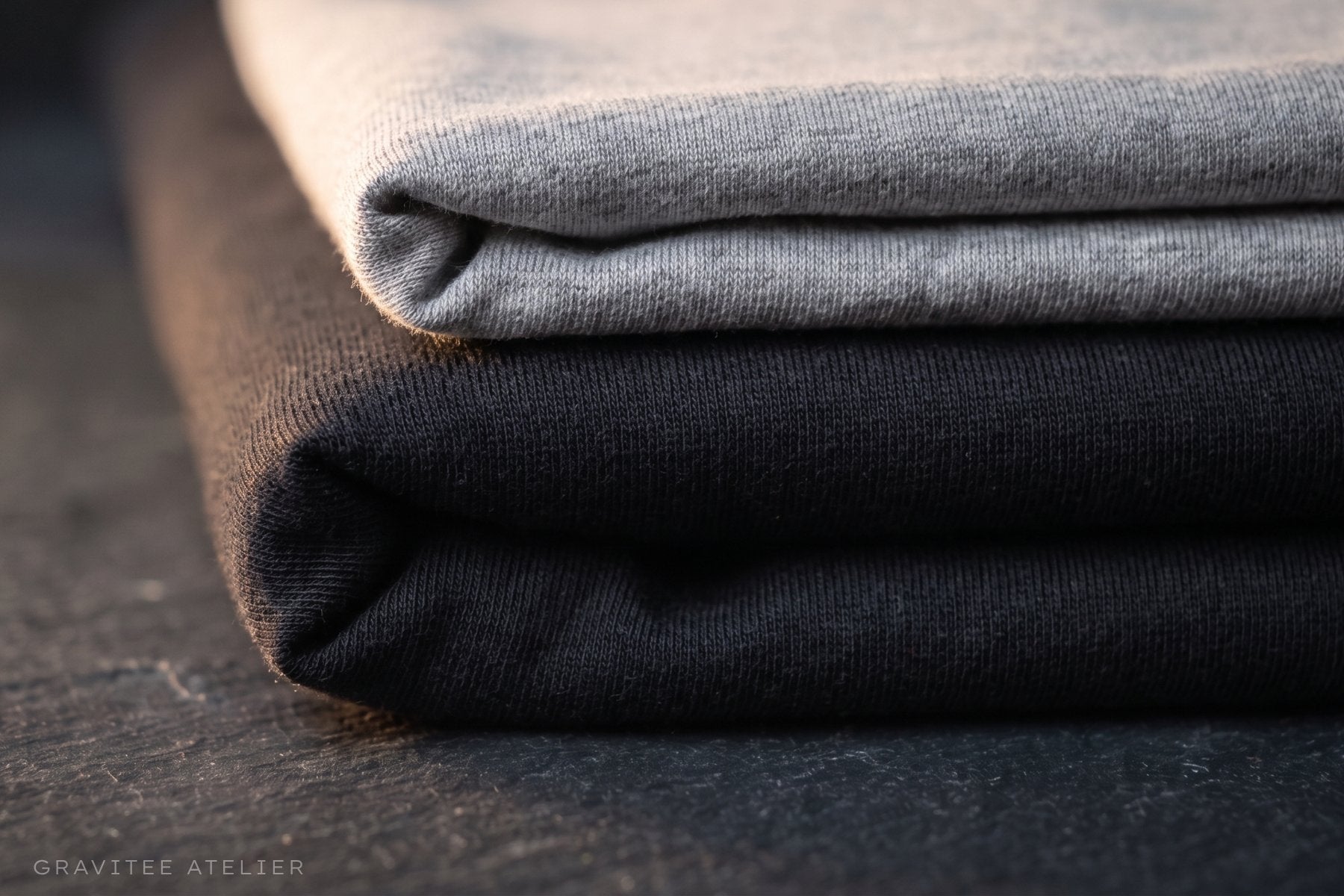
Look across a week, or a year, and the question changes from which is better to which is right today. The 180 is the tee for humid, still hours and a close line — worn on its own, or under a jacket when the day calls for one. The 240 is the tee for a relaxed silhouette, cooled rooms and cooler evenings — worn on its own, or under an open overshirt.
They are not a step up and a step down. They are two answers, made from the same cotton with the same care, for the different days a wardrobe has to meet.
Questions you might ask
Is 240 GSM too warm for an Indian summer?
It depends more on the hour than the month. In the most humid, still hours, 180 is the lighter choice. For much of the day — air-conditioned rooms, evenings, a breeze — 240 is comfortable, and its oversized cut keeps the cloth off the skin.
Is 180 GSM too light to hold its shape?
No. 180 sits in the mid-weight range: light enough to breathe across the day, present enough to hold its shape. Its shape is simply a closer one — it follows the line of the body rather than standing away from it.
Why are oversized tees usually heavier, and regular tees lighter?
Each weight suits its cut. A boxy, dropped-shoulder silhouette needs cloth with body to hold its shape; a lighter fabric in an oversized cut tends to collapse and cling. A regular cut follows the body, so it suits a lighter cloth that drapes and moves with you. That is why our oversized tees are made at 240 GSM and our regular tees at 180.
Which is better for layering?
Under a fitted shirt, jacket or sweater, 180 sits flatter and layers more neatly. Under an open overshirt or a relaxed jacket, 240's body becomes part of the look. Both are made to be worn on their own.
In brief: 180 or 240 GSM
- GSM is grams per square metre: how much cloth, not how good.
- 180 GSM is lighter and airier; it drapes close and moves with you — made for humid, still hours and a close line.
- 240 GSM has more body; it holds a relaxed shape and keeps a little more warmth — made for cooled rooms, breezy evenings and cooler days.
- Same cotton, different weight: the body of both is 100% super-combed cotton, bio-washed and pre-shrunk.
- Why both: one for humid hours and a close line; one for cooled rooms, evenings and a relaxed shape. Find both weights in our tees for men and women.
There is more beneath the colour, and more Atelier Notes to come. If you would like the next one to find you, join The Palette Letters below — our editorial space for subscribers, where we share how the atelier thinks, works and sees.
Colours that speak — find yours →
Colour that speaks.
- Posted in:
- atelier-notes
- cotton
- fabric
- gravitee-atelier
- gsm